What is Flocking?
Flocking is a surface treatment in which you apply thousands of tiny fibres (flock) electrostatically onto a glue-covered surface. The fibres stand upright and form a soft, velvety layer – both beautiful and functional: it dampens sound, reduces reflection and increases wear resistance. Below you'll read how flocking works, what it's used for and how you can flock yourself.
What is flocking?
Flocking is a special surface treatment in which small fibres – usually nylon – are applied electrostatically onto a glue-covered substrate. The result is a velvety texture that is not only aesthetically appealing but also offers functional benefits such as sound damping, grip and wear resistance. This technique is used worldwide across the most diverse sectors, from automotive to art and design. In this text we take you into the world of flocking: from how it technically works to its applications and benefits.
How is flocking applied?
Flocking is the process in which cut fibres (called flock) are shot perpendicularly onto a glued surface under the influence of an electrostatic field. The fibres stand upright in the glue layer, creating an even, soft and visually appealing finish. The fibres used are usually nylon, polyester or viscose, and vary in length, thickness and colour depending on the desired application.
The substrate that is flocked can range from plastic and metal to wood, textile or cardboard. The choice of glue is crucial and is matched to both the substrate and the conditions of use (such as moisture, temperature or wear).
History and development
The origin of flocking goes back to ancient China, where fibres were applied to fabrics with natural glue for decorative purposes. In the twentieth century the technique was professionalised and automated, particularly in the 1930s and 1940s in Germany and the United States. The introduction of electrostatic technology in the 1950s brought a revolution: fibres could now be applied far more precisely and efficiently.
Since then, flocking has grown into a fully-fledged industrial technique, with applications in the car industry, packaging sector, fashion and interior design, among others.
Applications of flocking
Flocking is used in numerous sectors:
- Automotive
- For dashboards, storage compartments, door panels and seals. Flock prevents reflection, dampens sound and enhances the sense of luxury.
- Packaging & retail
- Jewellery boxes, glasses cases and luxury packaging are often flocked for a high-quality appearance.
- Interior & design
- Wall panels, furniture and decorative objects gain a unique texture and colour intensity.
- Acoustics & insulation
- Flock layers help absorb sound and insulate against heat or cold.
- Art & decoration
- Artists use flock for tactile artworks and installations with a special visual impact.
Technical properties
Flocking offers a range of unique properties:
- Light absorption
- The fibre structure creates a matte, non-reflective finish – ideal for photography, theatre and automotive applications.
- Sound damping
- The fibres absorb sound waves, contributing to a quieter environment.
- Grip and texture
- The velvety structure provides more grip, for example in storage compartments or handles.
- Wear resistance
- Flocked surfaces are surprisingly durable and resistant to friction and use.
- Insulation
- Flock layers can contribute to thermal and electrical insulation.
The flocking process step by step
The flocking process consists of four main phases:
- Surface preparationThe substrate is cleaned and, if necessary, pre-treated for optimal adhesion.
- Glue applicationA suitable glue is applied evenly, depending on the material and application (e.g. water- or solvent-based).
- Applying the fibresThe fibres are shot onto the surface with an applicator, so they stand upright in the glue.
- Curing and finishingThe glue cures (at room temperature or in an oven), after which excess fibres are removed.
Benefits of flocking
Flocking offers a unique combination of aesthetics and functionality:
- Aesthetic
- The velvety finish gives products a luxurious, soft and warm appearance.
- Functional
- Improved grip, sound damping, scratch resistance and anti-reflection make it suitable for demanding applications.
- Durable
- Flock is wear-resistant and can contribute to a longer product life. Moreover, many fibres are recyclable.
Comparison with alternative techniques
Flocking differs from other surface treatments:
| Technique | Properties | Differences from flocking |
|---|---|---|
| Powder coating | Strong, scratch-resistant, even surface | No texture or soft finish |
| Spray paint | Versatile, colour variation | Less durable, no tactile experience |
| Fabric upholstery | Soft and comfortable | Less wear-resistant, harder to clean |
| Flocking | Velvety, durable, sound-dampening | Unique in texture and functional benefits |
More about flocking
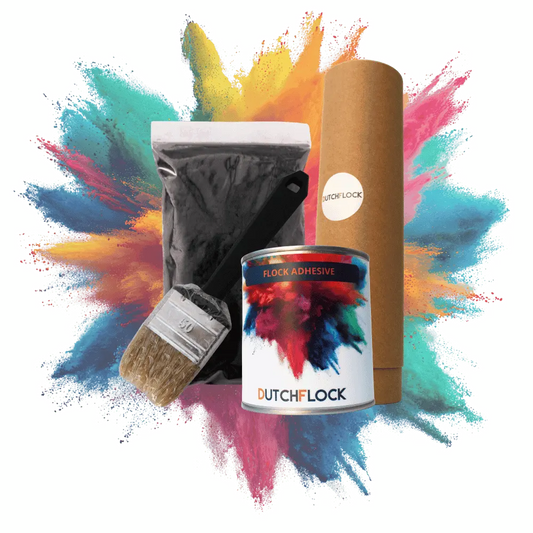
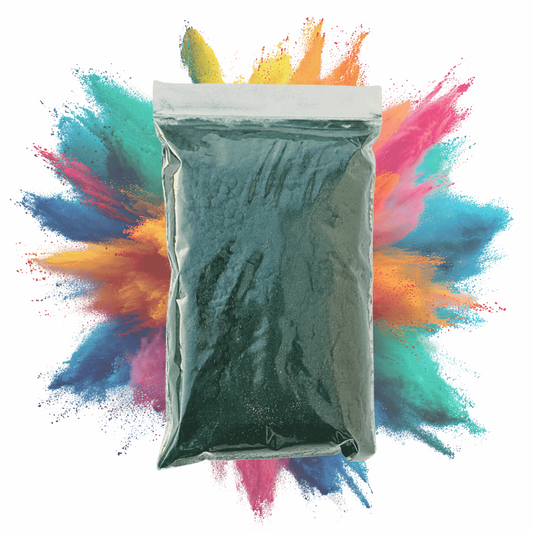
Curious which flock powder colours and applications there are, or how to get started yourself? Read our guide Applying flock: step by step or start straight away with a complete FlockBox.
Frequently asked questions about flocking
What does flocking mean?
Flocking is the electrostatic application of short fibres onto a glue-covered surface, creating a soft, velvety layer.
What is flocking used for?
Flocking is used in automotive (dashboards and interior), for luxury packaging, in interior and furniture design, art, model building and decoration.
Can I flock myself?
Absolutely. With a complete FlockBox you have everything to hand: flock fibres, glue, applicator and brush. Follow our step-by-step guide for the best result.